Food waste in the hospitality sector isn’t just an environmental burden; it’s a massive financial leak. On January 27th, The PLEDGE on Food Waste teamed up with Power Knot and Anantara The Palm Dubai Resort to discuss a proven framework for turning this waste into a measurable resource.
If you missed the live session moderated by Tiffany McGrath, Director of Sustainable Hospitality at Sustainability Kiosk, here is a comprehensive recap of the strategic takeaways shared by our panel of experts.
Measurement is the Antidote to Denial
The industry often underestimates food waste, which typically consumes 6% to 14% of food revenue. Marco Sandri emphasized that the first step to reduction isn’t a new recipe; it’s a scale.
- The Reality Check: Many hotels operate in “denial” until they see the data.
- The Lesson: You cannot manage what you do not measure. Implementing a tracking system (like The PLEDGE’s 95 criteria) forces a hotel to identify exactly where the “leaks” are, transforming waste from an invisible cost into a manageable metric.
Follow the Food Waste Hierarchy
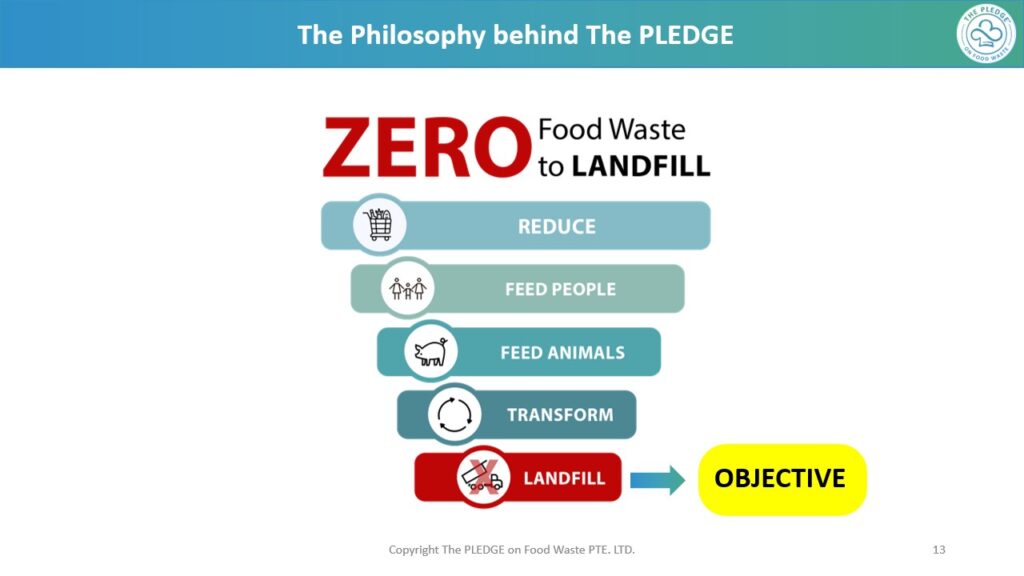
Both The PLEDGE and Power Knot advocate for a specific order of operations to ensure the highest environmental and financial return.
- Prevention First: Focus on the source, reducing over-purchasing and buffet overproduction.
- Recovery: Feed people or animals where local laws allow.
- Transformation: Use technology like the LFC Biodigester to turn the “unavoidable” waste (peels, bones, scraps) into gray water. This prevents food from reaching landfills, where it would otherwise produce harmful methane gas.
The “Small Plate” Buffet Strategy
Chef Dominic Petzold shared a practical “luxury hack” used at Anantara The Palm to tackle plate waste without compromising the guest experience. Large chafing dishes often lead to massive waste as the kitchen tries to keep the buffet looking “full” until the very last minute.
- The Strategy: Switch to individual, smaller platters toward the end of service.
- The Result: It maintains the 5-star aesthetic and guest experience while significantly lowering the volume of food at risk of being tossed.
Culture Over Hardware
While the Power Knot technology is “extraordinary,” Chef Dominic was clear: the team is the engine. You don’t need a massive team of external consultants; you need to engage the people already in your kitchen.
- The Lesson: Take team members in small groups and explain the “why.” At Anantara, once the staff understood the impact, they moved from Gold to All-Star status with their own momentum.
- Employee Buy-in: When the team is rewarded and involved, sustainability becomes an automated part of the daily workflow rather than a “chore.”
Technology Provides the “Proof”
For global certifications and corporate ESG (Environmental, Social, and Governance) goals, “guessing” isn’t enough.
- Data as Evidence: The LFC Biodigester doesn’t just dispose of waste; it generates NTEP-certified data.
- The Lesson: Having real-time reporting on CO2 reduction and waste weight provides the “hard evidence” required for The PLEDGE audits. It allows managers to compare different outlets and identify outliers in real-time.
As the panel concluded, sustainability is a journey. Whether you are a large resort or a boutique hotel, the key is to start with awareness, begin segregating waste, and gradually implement the framework. As Chef Dominic noted, “It is not a program you roll out for one outlet… you make everyone part of it.”
Discover the full story behind the first hotel in the UAE to achieve the 100% All-Star rating. Learn the specific steps, challenges, and triumphs of their journey in our deep-dive feature:
👉 Read Now: How Anantara The Palm Dubai Resort Tackles Food Waste