
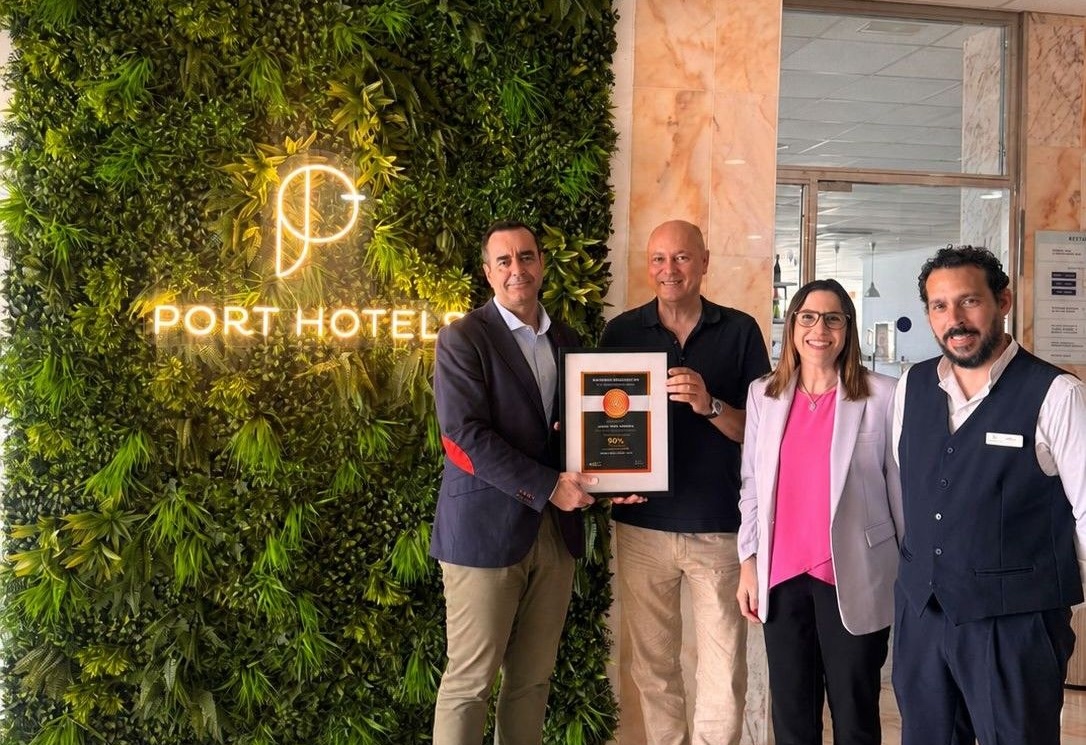
How Hotel Port Europa Achieved Gold Status in Food Waste Reduction
The Mediterranean hospitality sector is experiencing a powerful shift toward environmental responsibility. Leading this movement is Hotel Port Europa (part of Port Hotels), which recently achieved a landmark victory for sustainable hospitality.
Following a rigorous onsite audit on April 9, 2026, the property earned the prestigious Gold Certification from The PLEDGE on Food Waste, securing an outstanding 90-point final score. Guided by the leadership of Enrique Pérez Martín and Manuel Álvarez Giménez, alongside Executive Sous Chef Emmanuel A. Gulias, Hotel Port Europa has successfully aligned commercial buffet operations with measurable environmental impact.
Here is the exact operational roadmap they used to dramatically slash food waste, offering a scalable blueprint for hotels worldwide.
The Proven Impact: Hotel Port Europa by the Numbers
Before diving into the strategy, let’s look at the verified results. By comparing their baseline data (March 2023–March 2025) against their first full year of implementation (March 2025–March 2026), the property achieved massive reductions:
| Metric | Baseline (2023–2025) | Post-PLEDGE Result (2025–2026) | Total Reduction (%) |
| Waste per Cover (Grams) | 136 | 52 | 61% Decrease |
| Average Waste per Day | 69 | 40 | 42% Decrease |
Environmental Footprint Saved:
- 41,094 kg of CO2 emissions avoided.
- 16,438 kg of total food waste prevented (the equivalent of 32,875 individual meals saved).
The 4-Step Sustainable Hospitality Roadmap
Hotel Port Europa achieved perfect marks ($76/76$ points) across all mandatory criteria. Their success relies on a four-pillar roadmap that integrates staff engagement, technology, kitchen logistics, and customer awareness.
1. Data-Driven Monitoring via Smart Technology
You cannot manage what you do not measure. The foundation of the hotel’s success is a digital daily monitoring system.
- The Tech Stack: Smart scales connected to tablets link directly to the FIT Food Waste Tech platform.
- Categorization: Waste is meticulously logged into four streams: spoilage (deterioration), preparation, buffet, and plate waste.
- Actionable Insights: Visual color-coding in work zones helps staff instantly identify where waste occurs. Data is analyzed bi-weekly by the “Food Lovers Committee” to adjust purchasing and production schedules.
2. Standardizing Eco-Friendly Hotel Buffet & Preparation Tactics
Food waste prevention begins long before ingredients reach the plate. The culinary team, led by Executive Sous Chef Emmanuel A. Gulias, overhauled their food handling procedures:
- Sustainable Sourcing: Prioritizing local, seasonal products with optimal shelf lives.
- Inventory Control: Strict application of the First-In, First-Out (FIFO) methodology, paired with comprehensive traceability tagging.
- The “Zero Waste” Dish Initiative: At every single meal service, the buffet features a designated culinary creation specifically engineered to use up ingredient components that are traditionally discarded (such as peels, rinds, or seeds) or rescue leftovers from previous preparations. A prime example is their highly popular Pisto con Tomate (a rich Spanish vegetable stew).
3. Cultivating Deep Employee Commitment
A strategy is only as good as the team executing it. On April 24, 2025, leadership signed a formal food waste reduction policy, backed by an actionable roadmap deployed on May 15, 2025.
- Cross-Functional Alignment: The initiative bridges the gaps between kitchen staff, front-of-house restaurant teams, F&B managers, and quality control.
- Rapid Adoption: Thanks to intensive training sessions, the hotel reached a 32% waste reduction within the first two months of launch. By October 2025, the program expanded across sister properties in the chain to benchmark food cost KPIs.
4. Direct Customer Engagement
True sustainable hospitality involves bringing the consumer along for the journey. Hotel Port Europa actively reshapes guest behavior at the buffet line through transparent communication:
- Clear Signage: Eye-catching displays inform diners of the global impact of food waste and gently promote responsible consumption.
- Digital Updates: Progress milestones are shared externally via newsletters, blog updates, and corporate sustainability reports.
- Feedback Loops: Guests scan QR codes on satisfaction surveys to rate the hotel’s green initiatives, while smart options like managed picnic boxes replace open-ended waste scenarios.
The Next Frontier: Post-Consumer Circularity
Even with a Gold status ranking, the property continues to push boundaries. On December 1, 2025, Hotel Port Europa established formal partnerships with surplus platforms like Phenix and social entities like REMAR España to actively donate excess food. The next step in their roadmap involves developing formalized structures for organic waste alternatives, such as animal feed routing or composting.
Hotel Port Europa has proven that sustainability is not a compromise on luxury; rather, it is a hallmark of modern operational excellence.
By achieving an audited 90-point Gold Certification through The PLEDGE on Food Waste, Hotel Port Europa isn’t just making a claim—they have built a transparent, compliant, data-proven roadmap that completely bulletproofs their brand against greenwashing risks.
👉 Read how we navigated Spain’s new food waste law: Key Takeaways from the SGS Webinar


Great content! Keep up the good work!
Good post! We will be linking to this particularly great post on our site. Keep up the great writing
There is definately a lot to find out about this subject. I like all the points you made
I’m often to blogging and i really appreciate your content. The article has actually peaks my interest. I’m going to bookmark your web site and maintain checking for brand spanking new information.
Great information shared.. really enjoyed reading this post thank you author for sharing this post .. appreciated
I really appreciated helpful details I had not seen elsewhere this morning and I look forward to reading more from you
Thanks , I’ve recently been searching for info approximately this topic for a long time and yours is the best I’ve discovered till now. But, what in regards to the bottom line? Are you positive concerning the source?
Hi, i believe that i saw you visited my website so i got here to “go back the prefer”.I am trying to to find issues to improve my site!I guess its good enough to make use of some of your ideas!!