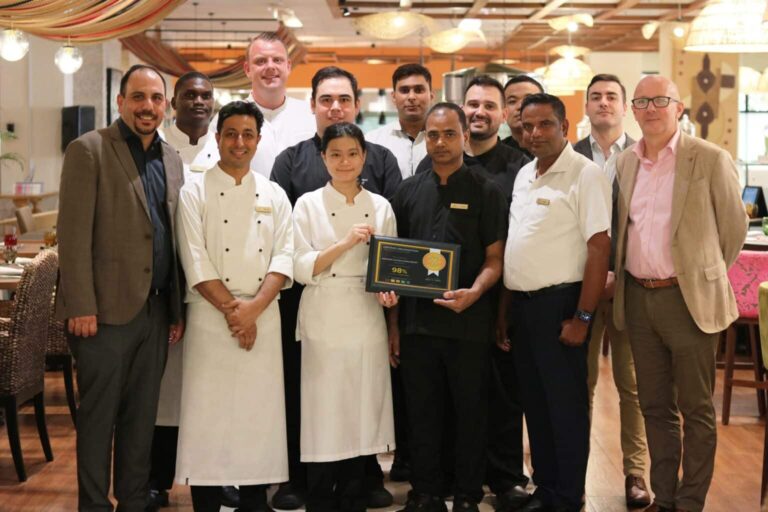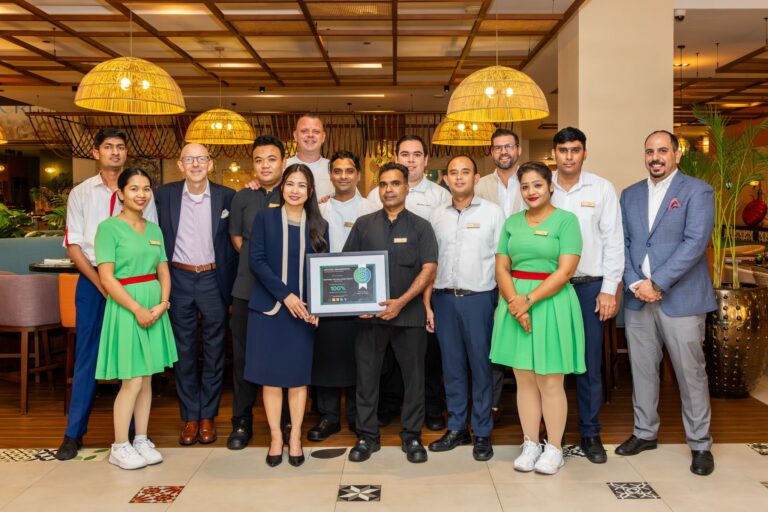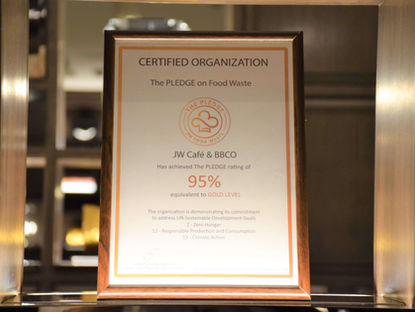
Prioritizing structural hotel food waste prevention allows high-volume luxury properties to slash operating expenses while protecting local metropolitan environments from landfill emissions. Taking definitive action toward its corporate sustainability commitments, the prestigious JW Marriott Hotel Bangkok recently achieved a historic milestone. The landmark property has been officially certified by The PLEDGE on Food Waste at the Gold level. Remarkably, the team achieved a stellar 95% compliance score during their third-party audit.
This program evaluates operations against 95 detailed criteria across seven core pillars of sustainability. Specifically, these pillars include policy adoption, staff awareness, and guest engagement.
See how your kitchen can achieve the same level of verified zero-waste excellence. Explore The PLEDGE certification framework. → [Explore The PLEDGE Certification]
Thailand’s Frontrunner in Hotel Food Waste Prevention
The property stands at the absolute forefront of Marriott International’s global environmental mission. This corporate mandate aims for a comprehensive 50% reduction in global food waste.
The hotel’s long-term sustainability journey originally began in 2018. To build internal capacity, the culinary team partnered with Lightblue Environmental Consulting. Together, they established systems to monitor kitchen loss and implement highly effective reduction procedures.
Consequently, these efforts resulted in an immediate 30.4% reduction in food waste per cover within twelve months.
Upcycling Surplus Kitchen Ingredients
The culinary teams at the popular JW Café and BBCO outlets designed highly creative ways to repurpose daily kitchen leftovers. These actions directly helped both popular outlets achieve their high scores during the audit.
Specifically, the back-of-house team implemented these unique upcycling procedures:
- Fruit Rinds: Chefs utilize discarded watermelon rinds to craft sweet watermelon candy.
- Cleaning Agents: Kitchen stewards ferment pineapple, mango, and papaya trimmings to produce natural cleaning agents.
- Bakery Surplus: The pastry team transforms day-old bread into premium soup croutons.
- Agricultural Feed: Workers grind discarded oyster shells into fine meal to provide local farmers with nutritious chicken feed.
So far, these circular habits have successfully eliminated 190 tons of carbon dioxide emissions. This reduction equals a full year of average electricity consumption for 5,830 local households.
Supporting the Bangkok Metropolitan Community
Furthermore, the property supports the vital work of the Scholars of Sustenance Foundation (SOS). This eco-focused non-governmental organization gathers unconsumed, edible food from commercial businesses.
Next, volunteers distribute the nutritious meals to orphanages and needy shelters across the Bangkok metropolitan area. To date, the hotel has donated 1,476.6 kilograms of high-quality surplus food. This logistics effort translates directly to 6,202 individual servings for vulnerable communities.
Ultimately, these combined strategies prove that luxury guest experiences can align perfectly with environmental stewardship. Adopting structural hotel food waste prevention secures the planet while building meaningful community ties.
Expand Your Sustainability Professional Network
Ready to position your venue at the forefront of the circular hospitality movement? You can easily join a verified network of global experts to maximize your operational impact.
First, discover how four Hyatt resorts in Bali lead Indonesia in reducing hotel food waste.
Take the first step toward optimizing your commercial property. Complete our initial evaluation to see how your current kitchen metrics align with global standards!