Understanding the core principles of reducing hospital food waste allows large-scale institutional kitchens to lower operational costs while meeting national climate goals. From portion sizes to community pilots in Clonakilty, progressive players are actively tackling food waste across Ireland. Globally, over one-third of all produced food ends up wasted annually. This mass destruction carries a mind-boggling global carbon footprint of 3.3 billion tonnes of greenhouse gases.
In Ireland, citizens waste close to one million tonnes of organic material per year. Consequently, this volume is enough to fill Croke Park stadium to the brim over 2.5 times. To make essential environmental changes, the commercial hospitality sector offers excellent guidance.
See how your kitchen can achieve the same level of verified zero-waste excellence. Explore The PLEDGE certification framework. → [Explore The PLEDGE Certification]
Commercial Kitchen Secrets for Reducing Hospital Food Waste
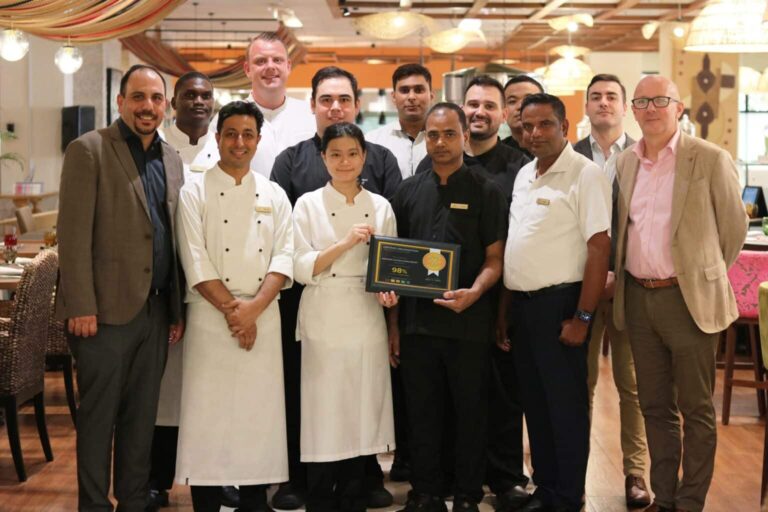
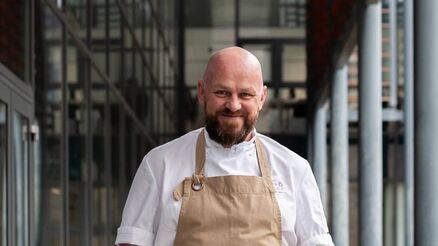
Large production kitchens, much like those focused on reducing hospital food waste, can learn from Dublin’s historic Shelbourne Hotel. Executive Sous Chef Daniel Taylor recently implemented The PLEDGE on Food Waste framework with incredible financial success.
The structured program began with corporate management committing to a formal food waste reduction policy. Next, the hotel brought employees, associates, and culinary suppliers on board.
Furthermore, the team installed scales and special automated bins around the building. Consequently, all food waste is weighed, photographed, and recorded as part of an ongoing auditing process. This data builds a detailed picture of back-of-house waste.
Specifically, the Shelbourne team utilizes several core counter-strategies:
- Scale Portioning: Chefs pre-cook and portion valuable proteins using digital scales to ensure exact consistency.
- Zero Waste Dishes: The bar menu incorporates a sweet potato and onion soup using the entire ingredient.
- Incentivized Suggestions: Canteen staff receive retail vouchers for identifying specific banquet food items that regularly return uneaten.
- Frequent Replenishment: Buffet stations feature smaller displays that staff replenish more frequently to preserve freshness.
Through these collective efforts, the hotel recorded a remarkable 21% decrease in total food waste within twelve months.
Creative Waste-Free Cooking and Storing
Chef Conor Spacey, author of Wasted, focuses heavily on creative waste-free cooking techniques for daily operations. He notes that produce, dairy, and bread remain the three most wasted culinary items globally.
Therefore, changing how commercial kitchens buy and store raw food is vital. For example, many fresh fruits release natural gases that rapidly accelerate the decomposition of neighboring items. For optimal shelf life, staff should only refrigerate specific produce after cutting it open.
The Power of Grassroots Community Participation
Other innovative Irish enterprises are pioneering closed circular systems. For instance, My Goodness Food created the award-winning Cork Urban Soil Project. The team utilizes an industrial anaerobic digester to transform local market waste into premium compost.
Similarly, a progressive pilot project in Clonakilty involves the entire civic community. Led by activist Allison Roberts, the initiative connects schools, local hotels, and local charities.
The project successfully redirects commercial surplus produce to local Meals on Wheels programs. In addition, home cooks gather to batch-cook collective meals from agricultural gluts. This summer, businesses are launching a campaign to eliminate single-use plastic condiment sachets entirely.
In conclusion, scaling these diverse models provides a clear roadmap for larger institutions. Applying these exact community and data-driven habits makes reducing hospital food waste a highly achievable operational goal.
Expand Your Sustainability Professional Network
Ready to position your venue at the forefront of the circular hospitality movement? You can easily join a verified network of global experts to maximize your operational impact.
First, learn how Pendray Inn and Tea House became Canada’s first Gold PLEDGE venue through systematic tracking. Additionally, discover how Anantara The Palm Dubai Resort implements hotel food waste prevention to earn historic Middle Eastern accolades.
Take the first step toward optimizing your commercial property. Complete our initial evaluation to see how your current kitchen metrics align with global standards!
Source: https://www.irishexaminer.com/food/arid-41402227.html